
Roof Repair vs Replacement: When to Make the Call (Iowa 2026)
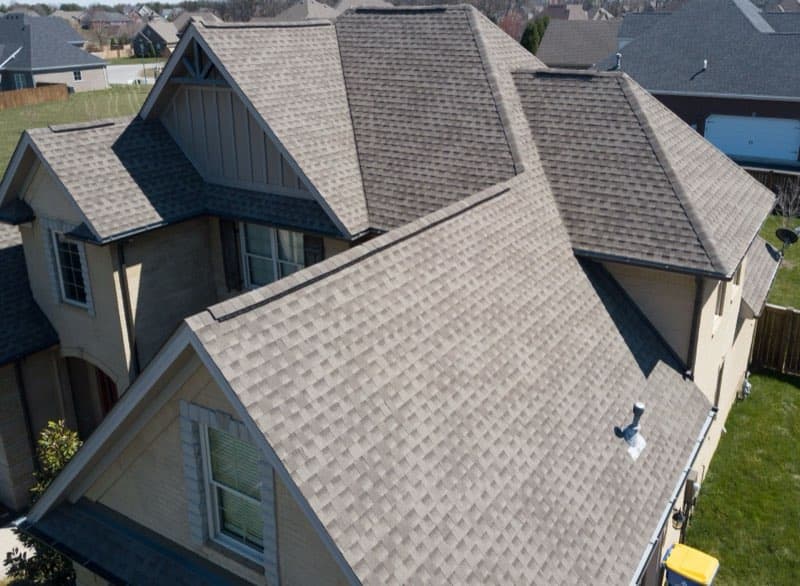
One roofer told you $850 to patch it. The next one walked the same roof and said the whole thing needs to come off and it's $18,000. Same shingles, same storm, same house. So what's actually right?
Sometimes it's the repair, sometimes it's the replacement, and the difference comes down to four questions that have nothing to do with which company is quoting. If you can answer them honestly, you'll know which side of the line your roof falls on before anyone climbs a ladder.
The honest framework: 4 questions that decide it
Every repair-or-replace decision in Iowa comes down to the same short list:
- How old is the roof?
- Is the damage localized or systemic?
- Is the deck under the shingles still solid?
- How many more years do you plan to stay in the home?
You don't need a roofer to answer questions 1 and 4. You'll need help with 2 and 3, but you can ballpark them yourself from the ground with a decent pair of binoculars. Once you have all four answers, the call usually makes itself.
Question 1: Roof age
Architectural shingles in Iowa typically last 25 to 30 years. That's the textbook number. In reality, our climate cuts the top end off pretty hard. Hail every couple summers, freeze-thaw cycles all winter, UV beating down in July, and a temperature swing from minus 10 to 95 in the same year. A roof that would last 30 years in San Diego is closer to 22 to 27 here.
So the age math is simple. Under 15 years old, repair is almost always the right starting point. 15 to 20 years, it depends on the other three questions. Past 20 years, repair is often lipstick on a pig. You can spend $1,200 patching one slope this fall, and the other three slopes will be calling you next spring.
The exception is a 22-year-old roof that's been pristine, sheltered by mature trees, and has had zero issues. That roof might still have 4 to 6 good years. But that's the exception, not the rule.
Question 2: Damage scope (localized vs systemic)
This is where most people get talked into a replacement they don't need, or talked out of one they do need. The honest test is whether the damage is in one spot or spread across the whole roof.
Localized damage looks like: 1 to 2 missing shingles after a windstorm. A single leak around the chimney flashing. A pipe boot that's cracked and dripping into the attic. Granule loss concentrated in one area below a tree branch. These are repair territory. A good roofer can fix them in a few hours and charge you somewhere between $400 and $1,500.
Systemic damage looks like: shingles missing or curling across 3 or more slopes. Granule loss across the entire field, not just one section. Multiple leak points in different rooms. Visible shingle cupping or "bald" patches you can see from the curb. These signal that the whole roof is at end of life. Repairing one slope just shifts the next failure 6 to 12 months out.
If you've had 3 or more repair calls in the last 2 years, the damage isn't localized anymore. It's systemic. The roof is just telling you in installments.
Question 3: Deck condition
The deck is the plywood or OSB layer underneath the shingles. It's the structural part of your roof, and it's the question most homeowners don't even think to ask.
Here's why it matters: you cannot put good shingles on a bad deck. If there's rot, soft spots, or sagging between rafters, no patch repair is going to hold. The new shingles need something solid to nail into, and water-damaged decking won't grip a nail properly. Within a year or two you'll be right back where you started.
Signs the deck might be compromised: visible dips or waves when you look down the roof line from the curb. Soft spots a roofer notices when walking it. Water staining on the underside of the deck visible from inside the attic. Active drip points that have been leaking for more than a season.
Solid deck under the damaged area means repair is on the table. Compromised deck means you're replacing, whether you wanted to or not. The deck question often shifts a $1,500 repair into a $18,000 replacement, and there's no honest way around it.
Question 4: How long are you staying?
This is the question that flips a lot of decisions, and almost nobody talks about it.
Under 3 years, repair maximizes your ROI almost every time. A $15,000 to $25,000 replacement does not return $15,000 to $25,000 in home equity. You get part of that back at resale, depending on the market. If you're listing soon, a clean repair that gets you through inspection is usually the smarter financial move, unless the roof is so far gone it becomes a deal-killer for buyers.
3 to 10 years, it depends entirely on the first three questions. A 12-year-old roof with localized damage and a solid deck? Repair. A 21-year-old roof with damage on multiple slopes? Replace, because you'll be doing it anyway in the middle of that window.
10+ years staying in the home, replacement is almost always cheaper than the repair-on-repair cycle. Three $1,500 repairs over 8 years is $4,500, plus the inconvenience and the leaks in between, plus you still have an aging roof at the end of it. Just replace it once and stop thinking about it.
Cases where repair makes total sense
The clean repair case looks like this: under 15 years old, damage in one specific area, solid deck underneath, and you're staying in the home long enough that another 10+ years of life is worth more than a fresh roof would be.
Real examples we see in Ankeny and Des Moines:
- 8-year-old roof, recent installation, lost 6 shingles to a 70 mph straight-line wind. Repair, no question.
- 12-year-old roof, leak around the chimney that turns out to be failed flashing. Reflash, seal, move on.
- 10-year-old roof, pipe boot cracked from UV. $400 fix, done in an hour.
- Hail damage limited to one slope facing the storm, deck still solid, recent roof. Repair that slope.
In every one of these cases, full replacement would be a waste of money. A good roofer will tell you that directly.
Cases where replacement is the only honest answer
The clean replacement case is the inverse: past 20 years old, visible aging across the whole roof, a history of leaks at different points, and either a deck question mark or a plan to sell within 5 years.
Real examples:
- 25-year-old roof with 4 leak repairs in the last 18 months. The next one is coming. Replace.
- Pre-listing roof inspection turns up curling shingles across all 4 slopes and a soft spot near the valley. That's a buyer-killer. Replace before listing.
- 22-year-old roof, granule loss so heavy the gutters are full of grit, multiple bald patches. End of life.
- Storm damage on a 19-year-old roof where the insurance adjuster declares it totaled.
The honest answer in these cases isn't "let's try a repair first." It's "you need a new roof, and here's the plan."
The dangerous middle: roofers who push replacement on every visit
There's a real financial incentive to push replacement when repair would do the job. A $15,000 replacement is a much better day for a roofing company than an $800 repair.
Red flags to watch for:
- Every quote is full replacement, no repair option ever offered.
- The inspection takes less than 15 minutes and the verdict is "total replace."
- The roofer won't show you photos of the actual damage, just gives you a verbal verdict.
- The pitch leans hard on insurance "covering it" without explaining the deductible math.
- High-pressure timeline. "We can get the crew here Monday, but the quote expires Friday."
A trustworthy roofer will offer you both options when both options are real. They'll show you photos of the damage and walk you through which call they'd make and why. If the answer really is replacement, they'll explain exactly why repair won't hold. If repair will work, they'll quote it without trying to upsell you.
Insurance consideration
If storm damage is involved, the math changes. Matching shingles on an older roof can be difficult because colors weather and product lines change. We document availability, repairability, and the construction options in writing; the insurer decides what scope it covers.
If there's no storm involvement, insurance is not in the picture. The decision is pure ROI math. You're paying out of pocket either way, and the four questions above are your whole framework.
The other piece: if the insurer's scope addresses only part of the roof, compare that authorized work with the condition and remaining life of the rest of the system. We can price the construction options side by side; coverage decisions stay with you and your insurer.
How Bakeris approaches the decision honestly
We charge a $98 service call to come out and look at your roof. That fee covers our time and is credited toward the approved repair cost if you move forward with us. It also means we're not in a hurry to upsell, because we already got paid for the inspection.
If you need a $600 repair, we'll quote you a $600 repair. If you need a $19,000 replacement, we'll tell you that too, and we'll show you exactly why on the deck or the shingle field. If you're in the middle and both options are real, we'll walk you through both and let you decide.
For cost breakdown if replacement is the call, see our roof replacement cost guide for Ankeny and Des Moines. Otherwise, learn more about our roof repair and full replacement services.
About Bakeris Roofing
Bakeris Roofing is a family-run roofing company serving Ankeny, Des Moines, and central Iowa. 700+ Google reviews from homeowners who appreciate getting a straight answer instead of a sales pitch. We repair roofs when repair makes sense and replace them when replacement is the honest call.
Not sure which side of the line your roof falls on?
Call (515) 967-8199 or request a $98 repair diagnosis. We'll walk the roof, show you photos, and tell you straight which call makes sense for your situation.